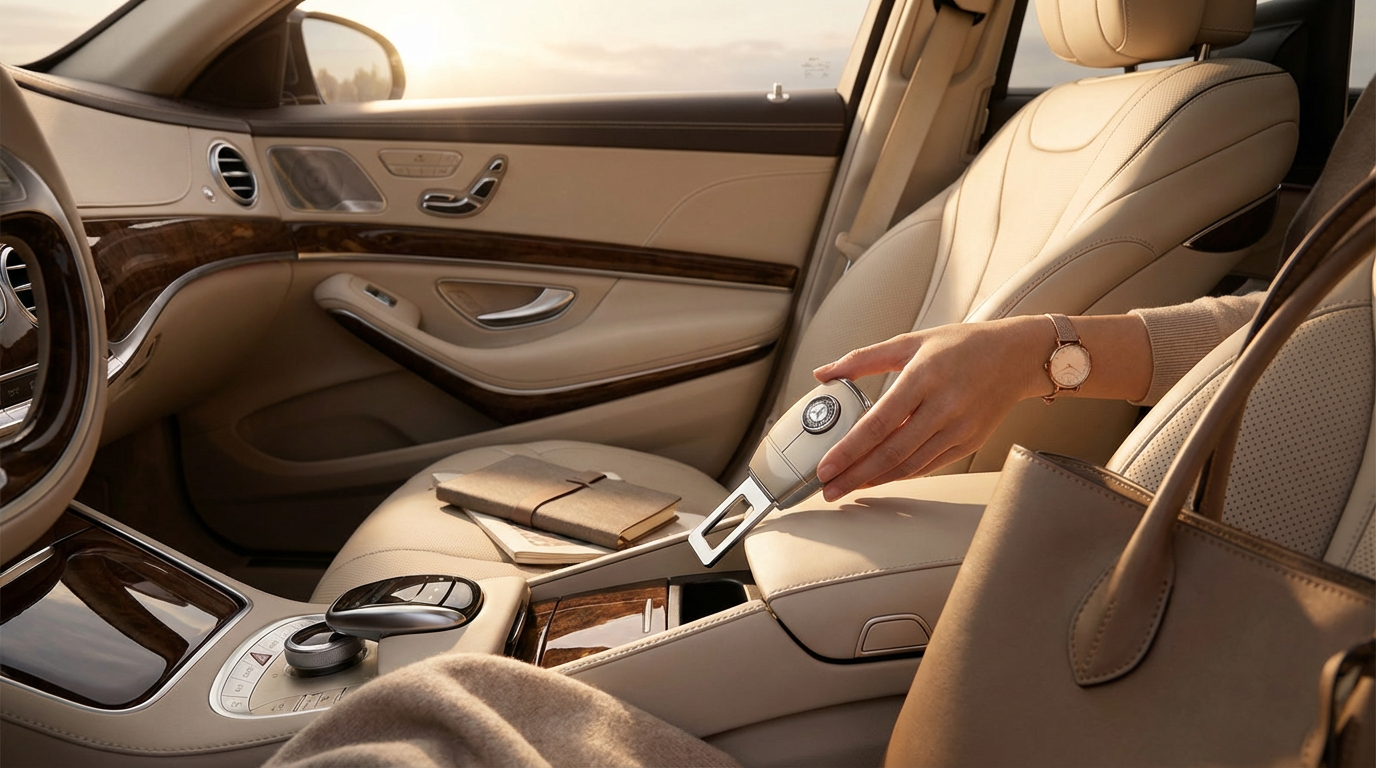
Are Seat Belt Extenders Safe? The Debate Is Framed Incorrectly
 Maya ChenContributing Editor
The safety debate around seat belt extenders is framed incorrectly; the real choice isn't between an extender and a standard belt, but between using an extender and wearing no seat belt at all. The conventional wisdom focuses on the potential risks of an extender versus a factory-installed belt, a comparison that is irrelevant for anyone who physically cannot buckle the standard belt. This flawed premise ignores the most dangerous possible scenario: being completely unbelted.
The Unbuckled Baseline: 0% Protection
An unbuckled seat belt provides zero protection in a collision. This isn't an opinion; it's a physical reality. According to the NHTSA, seat belts saved an estimated 14,955 lives in a single recent year (source). For an individual who cannot connect their vehicle's buckle, their starting point for safety is zero. They have no access to this fundamental, life-saving technology. Here's the part nobody talks about: any discussion of extender safety that doesn't start from this 0% baseline is an academic exercise with no real-world application for the user in need.
Moving from Zero to Functional Safety

Photo by Levent Simsek on Pexels
Run the math: the protection offered by a properly manufactured and installed seat belt extender is infinitely greater than the zero protection of an unbuckled belt. The primary function of an extender is to make buckling possible. It moves a user from a state of guaranteed danger to one of functional protection. While a factory belt is the ideal, it is not an option for everyone. Therefore, the extender's role is not to replicate the factory belt perfectly, but to bridge the gap between no protection and a functional restraint system. This requires rejecting one-size-fits-all solutions; understanding why a universal seat belt extender is often a poor choice is critical to achieving this functional safety.
The Correct Risk Calculation
The risk of an extender must be weighed against the guaranteed danger of being unbelted, not against a perfectly fitting belt that is unusable. For larger-bodied individuals, people wearing bulky work gear, or even drivers of Ford trucks in winter coats, the standard belt may not be long enough. In these cases, a vehicle-specific, rigorously tested extender is the only viable path to any level of crash protection. The alternative is to remain unbuckled, a choice that is objectively more dangerous in any scenario.
Where This Logic Does Not Apply
The only, and absolute, exception to this logic is for child restraints. Seat belt extenders must never be used with car seats or booster seats. These systems have their own specific, crash-tested installation protocols that an extender would compromise, creating a known and unacceptable risk. This rule is non-negotiable. The use case for an extender is for an adult who cannot otherwise buckle up, such as a driver dealing with a low-slung buckle in a BMW who needs a bit more length to connect the latch plate.
I'll change my mind when safety agencies publish crash test data comparing a properly installed, vehicle-specific extender against a completely unbelted occupant in the same vehicle. Until that data exists, the logical choice is to enable buckling.
Are seat belt extenders legal?

Yes, seat belt extenders are legal to sell and use in the United States, provided they meet the Federal Motor Vehicle Safety Standards (FMVSS). Reputable manufacturers test their products to meet or exceed standards like FMVSS 209, which governs seat belt assemblies. However, legality hinges on using a product that is tested and appropriate for your specific vehicle.
Is a universal seat belt extender safe?
Generally, no. The term "universal" is a significant red flag. Seat belt buckle designs vary widely between manufacturers, models, and even years. A generic extender may click without forming a secure, crash-tested lock. This creates a false sense of security. The only safe extender is one explicitly designed and tested for your vehicle's specific buckle mechanism.
What the safety authorities actually say
Federal safety rules do cover extenders: FMVSS No. 209 applies to all seat belt assemblies, including ones fitted after you buy the car (49 CFR 571.209) — so a compliant assembly is a defined thing, not a marketing phrase. For a crash-critical need, the safest route is a manufacturer extender: NHTSA has noted that the large majority of vehicle models already offer a factory extender or a longer belt for exactly this reason. Treat our product as a comfort and convenience accessory, and get a vehicle-specific extender from your dealer when a properly rated restraint is what you need.