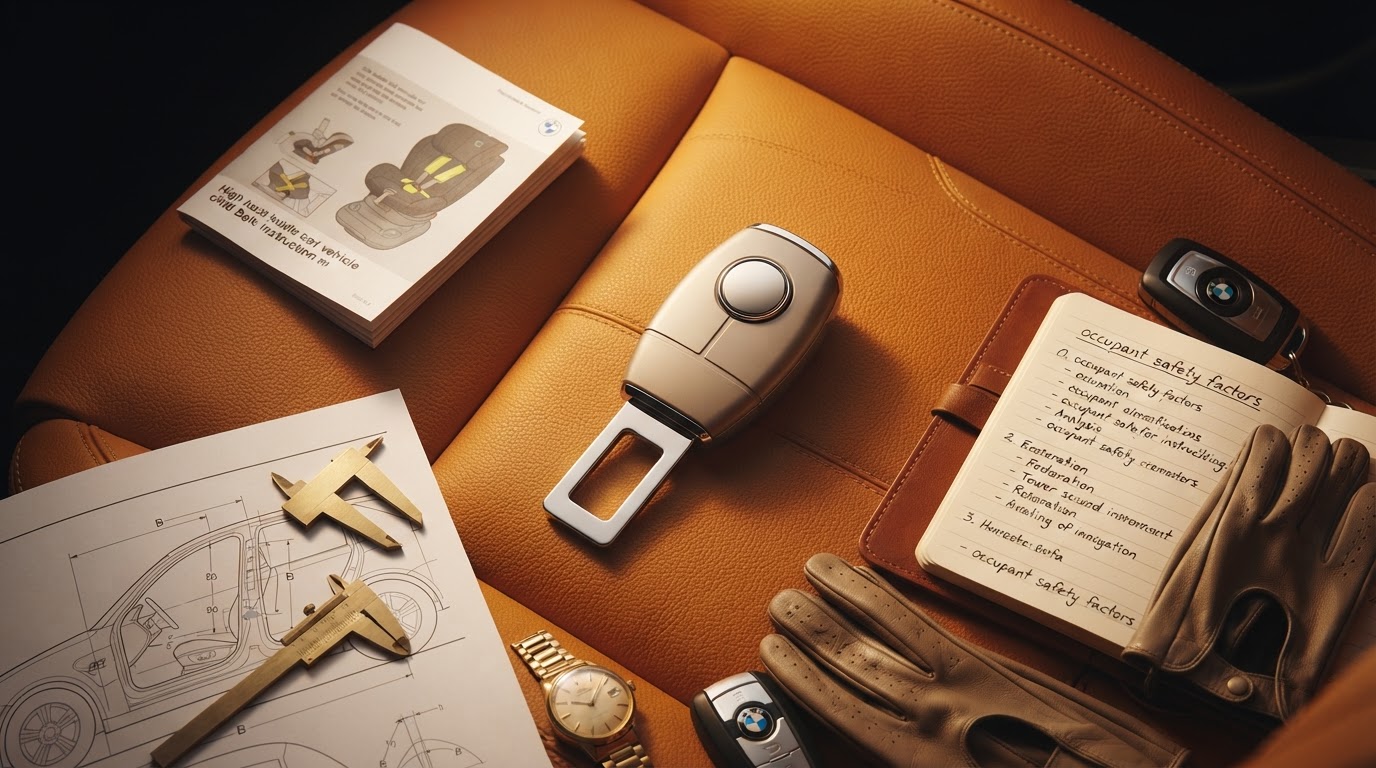
Optimizing Adjustable Vehicle Seat Belt Extension Utility
 Maya ChenContributing Editor
September 16, 2026. This analysis evaluates the mechanical integration of belt extensions within modern automotive safety systems. It is intended for consumers navigating the conflicting data regarding belt length, occupant size, and child restraint systems.
The Geometry of the Belt Path Failure
The conventional wisdom says that any extension of the factory seat belt buckle provides a net gain in safety by ensuring the occupant is actually restrained. This logic is flawed because it ignores the specific geometry of the three-point harness. When a seat belt extender is introduced, it shifts the position of the buckle relative to the occupant's hip. According to The Car Seat Lady, a seat belt extender is essentially an extra piece that goes between the male and female ends to increase length, but this additional hardware often creates a "slack" point that factory sensors are not calibrated to manage. For child passengers, the risks are more acute. Many consumers search for a child car seat belt extender to solve the problem of buried buckles in deep-cushioned back seats. However, data from Safe in the Seat indicates that parents should never use seat belt extenders to install car seats or booster seats, as the hardware interferes with the tight fit required to prevent head excursion during a collision. In many vehicle models, adding a seat belt extender for car seats changes the lap belt's position from the pelvic bone to the soft tissue of the abdomen, a transition that significantly increases the risk of internal injury during sudden deceleration. The physics of a crash do not care about convenience; they care about the rigidity of the anchor points and the path of the webbing.
Mechanical Integrity of the Adjustable Vehicle Seat Belt Extension
Here's the part nobody talks about: the variance in tensile strength between universal components and vehicle-specific hardware. The Adjustable Vehicle Seat Belt Extension is designed to address the physical limitations of factory belts for plus-size occupants and those with limited mobility, but its application must be precise. Research into seat belt extension for car seats shows that the primary failure point is often the tongue-and-buckle interface. A car seat belt buckle extension must match the exact dimensions of the vehicle's original equipment manufacturer (OEM) specifications to ensure the locking mechanism engages fully. In the context of booster seats, the issue isn't just the length, but the elevation of the buckle. While products like the Buckle Booster™ Seat Belt Receptacle Raiser aim to stabilize the female end for easier clicking, they do not extend the webbing itself. If an occupant requires an Adjustable Vehicle Seat Belt Extension, they must ensure the device is E4 safety certified, a standard that requires the component to withstand specific force loads. The market is flooded with uncertified "universal" options that have not undergone dynamic crash testing. Run the math: a 200-pound occupant in a 35 mph collision exerts thousands of pounds of force on that single metal tongue. If the extension is not rated for those specific loads, the entire safety system is compromised. The goal is not just to make the buckle reach; it is to ensure the buckle holds under extreme stress.
Decision Framework for Extension Integration
Before integrating an Adjustable Vehicle Seat Belt Extension into a vehicle, a technical audit of the seating position is mandatory. This is especially true when attempting to resolve issues with a seat belt extender for car seats or a seat belt extension for car seats. The following framework should be used to determine if an extension is the correct solution or a dangerous workaround:
- Verify the metal tongue width and hole dimensions match the vehicle's specific buckle type (e.g., Type A vs. Type B).
- Confirm the extension does not move the buckle more than two inches away from the original anchor point for adult occupants.
- Eliminate the use of extenders for any child restraint system that relies on a five-point harness or a high-back booster.
- Check for E4 or similar safety certifications stamped directly onto the hardware.
- Inspect the webbing for a minimum tensile strength rating that meets or exceeds the vehicle's factory belt specifications.
- Ensure the extension does not trigger a false "unbuckled" signal in the vehicle's Electronic Control Unit (ECU).
Shop Adjustable Vehicle Seat Belt Extension here.
Sources
- Buckle Booster™ Seat Belt Receptacle Raiser
- Seat belt extender for child booster seat buckles - Facebook
- The Car Seat LadySeat Belt Extenders