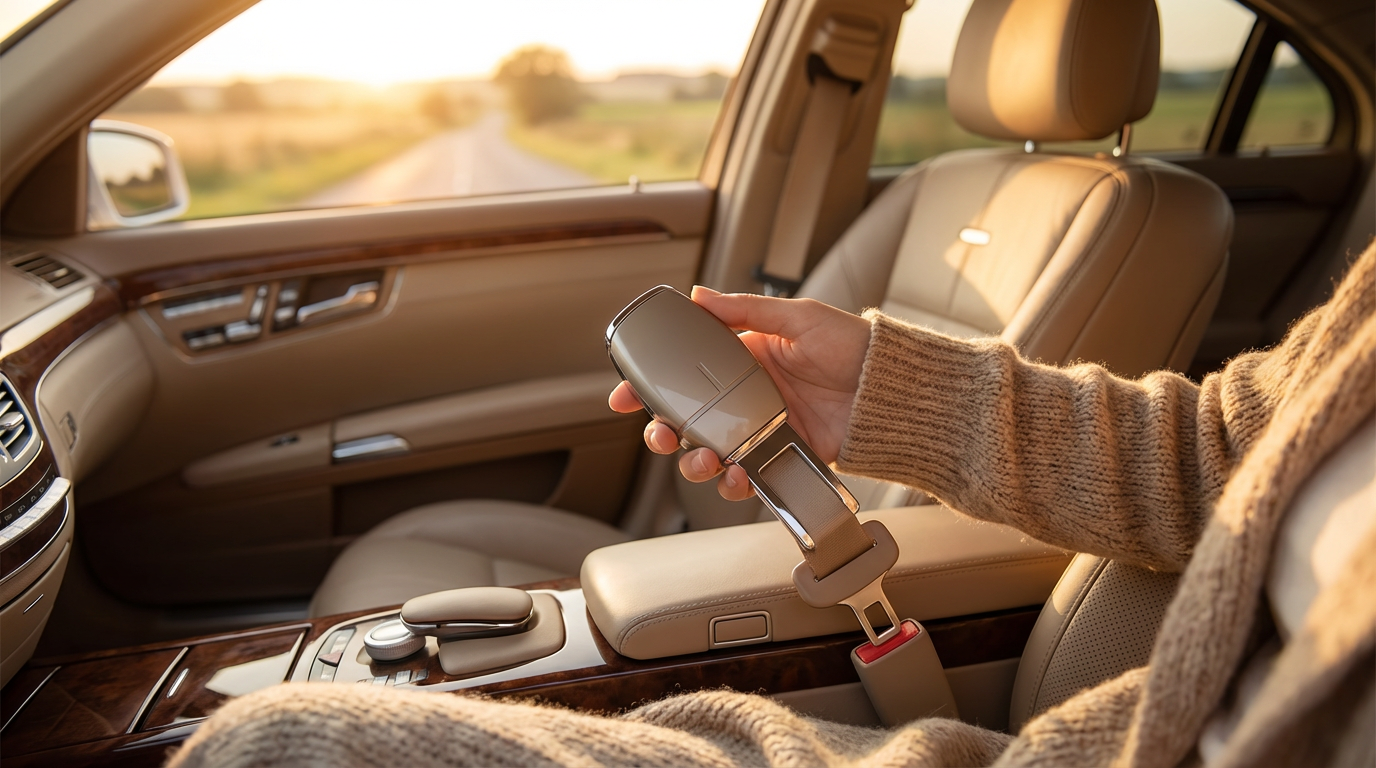
The Unspoken Risk of Car Seat Belt Extenders
 Maya ChenContributing Editor
The conventional wisdom says a car seat belt extender is a simple fix for a belt that’s too short or uncomfortable. For plus-sized occupants, pregnant women, or people with mobility issues, it seems like an obvious solution. But here's the part nobody talks about: when you click in an aftermarket extender, you are introducing an untested link into your vehicle's most critical, government-regulated safety system.
Vehicle manufacturers invest millions to ensure their restraint systems—the belt, the buckle, the retractor, the anchor points—comply with Federal Motor Vehicle Safety Standards (FMVSS) 209 and 210. These components are designed and crash-tested as a cohesive unit. An aftermarket extender, purchased from a third-party seller, has almost certainly not been tested with your specific vehicle's system. It creates a new, unvalidated failure point.
The issue isn't just about the strength of the extender's webbing or buckle. It's about geometry. An extender changes the position of the buckle, which can alter how the lap and shoulder belts lie across your body. According to the NHTSA, an improperly fitted belt caused by an extender may not perform as expected in a crash. A lap belt that rides up onto the abdomen instead of sitting low across the hip bones can cause severe internal injuries.
The appeal of a cheap, fast solution like a universal seat belt extender is understandable, but "universal" does not mean "universally safe." Before buying an aftermarket part, contact your vehicle manufacturer's dealership. Many automakers offer tested, approved extenders for their vehicles. Whether you're dealing with a low buckle in a seat belt extender for a BMW or need more slack to accommodate bulky gear in a Ford truck, the manufacturer is the only source for a component guaranteed to be compatible with your safety system.
Is a universal seat belt extender safe for my car?
A "universal" extender is not designed or tested for the specific buckle mechanics, anchor geometry, and load-bearing requirements of your vehicle. Using one means gambling that its design happens to be compatible, a risk that is not worth taking when dealing with a primary safety system. There is no guarantee of safety or performance in a collision.Do car manufacturers make their own seat belt extenders?

Photo by Nathan J Hilton on Pexels
Yes, many car manufacturers provide their own official, crash-tested seat belt extenders for specific models. These are the only extenders that should be considered, as they are engineered to work with the vehicle's existing safety system without compromising its integrity. Contact your local dealership's service department to inquire about availability for your vehicle.
I'll change my mind when aftermarket extender manufacturers are legally required to crash-test their products in every make and model they claim to fit, and publish the data. Until then, the only responsible recommendation is to source extenders directly from the vehicle's manufacturer.