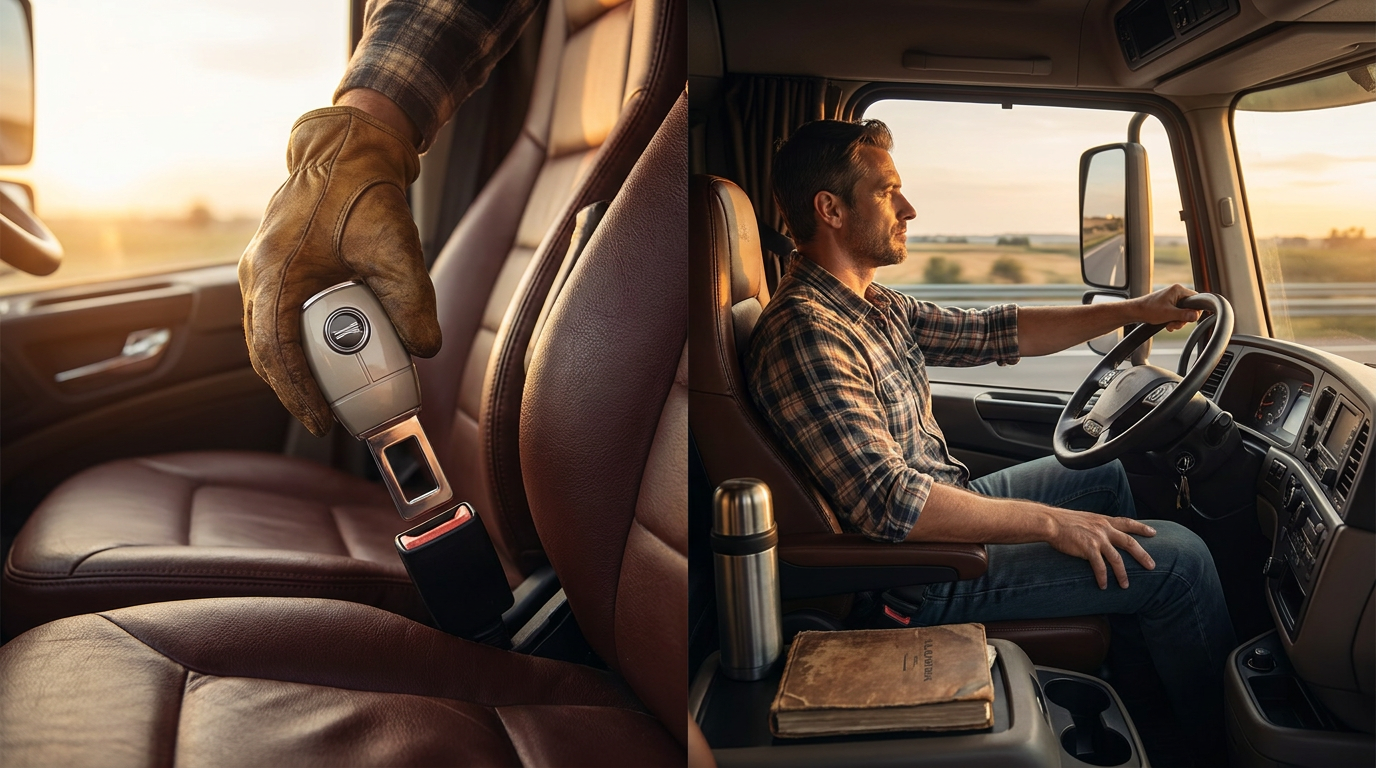
Why 'Heavy Duty' Truck Extenders Belong in Pickups, Not Semis
 Maya ChenContributing Editor
The market for a heavy duty seat belt extension for trucks is narrowly focused on commercial semi-cabs and heavy equipment. This interpretation is flawed. The term 'heavy duty truck' extender is misleading; the biggest need isn't in semi-cabs, but in personal F-250s and Ram 3500s used for work and family. These vehicles serve a dual purpose where standard factory belts fail to account for the realities of daily use, from hauling gear to transporting children. The safety gap isn't on the long haul—it's in the driveway and on the job site.
The Tradesperson's Unbuckled Reality
Consider a contractor in a cold climate. Wearing a tool belt and a heavy winter jacket can add several inches of bulk around the torso. In a Ford F-Series or Ram HD truck, this bulk often makes it impossible to latch the factory seat belt without dangerous compression or contortion. The belt is simply too short. This forces a choice between safety and the ability to work. An extender isn't a luxury; it's a necessary piece of equipment to remain compliant and safe. This application demands an extender built with premium materials for maximum durability that can withstand the rigors of a worksite environment.
The Crew Cab Car Seat Conflict

Photo by Athena Sandrini on Pexels
Here's the part nobody talks about: installing a modern, rear-facing car seat in a crew cab pickup often compromises front passenger safety. To fit the car seat correctly, the front passenger seat must be moved forward, sometimes significantly. As noted in a Cars.com Car Seat Check for the Ford F-150, this can leave an average-sized adult with minimal legroom and, more critically, an impossible angle to reach the seat belt buckle. The buckle receiver gets buried beside the seat, making an extender the only practical way for the front passenger to buckle up. This isn't a comfort issue; it's a fundamental flaw in vehicle design that an adjustable seat belt extender for car safety directly addresses.
'Heavy Duty' Should Mean Build Quality, Not Vehicle Class
The conventional wisdom says 'heavy duty' refers to the truck class, like a Class 8 semi. This is an incorrect and potentially unsafe assumption. The 'heavy duty' designation should refer to the extender's construction and safety rating, not the vehicle it's used in. A quality extender features high-tensile strength webbing and components that meet or exceed federal safety standards. Whether you need a rigid or flexible style depends on the buckle's position, but the core components must be robust. The decision between a rigid vs flexible seatbelt extension is secondary to ensuring the product itself is built to withstand crash forces, regardless of whether it's in a Peterbilt or a personal pickup.
Is a seat belt extender safe for a work truck?

Photo by cottonbro studio on Pexels
Yes, provided you use one that is E4 or E8 safety certified and designed for your specific vehicle. A high-quality, properly fitted extender is significantly safer than wearing a seat belt improperly or not at all. The key is to match the extender's metal tongue to your truck's buckle mechanism for a secure lock and to ensure the build quality is rated for automotive use.
Why is my truck's seat belt so short?
Factory seat belts are engineered for an average-sized occupant under typical conditions. They do not account for the added bulk of work gear like tool belts, heavy winter clothing, or the cabin geometry changes caused by installing a large child car seat. This creates a gap where the standard belt is insufficient for many real-world users of personal-use heavy-duty pickups.