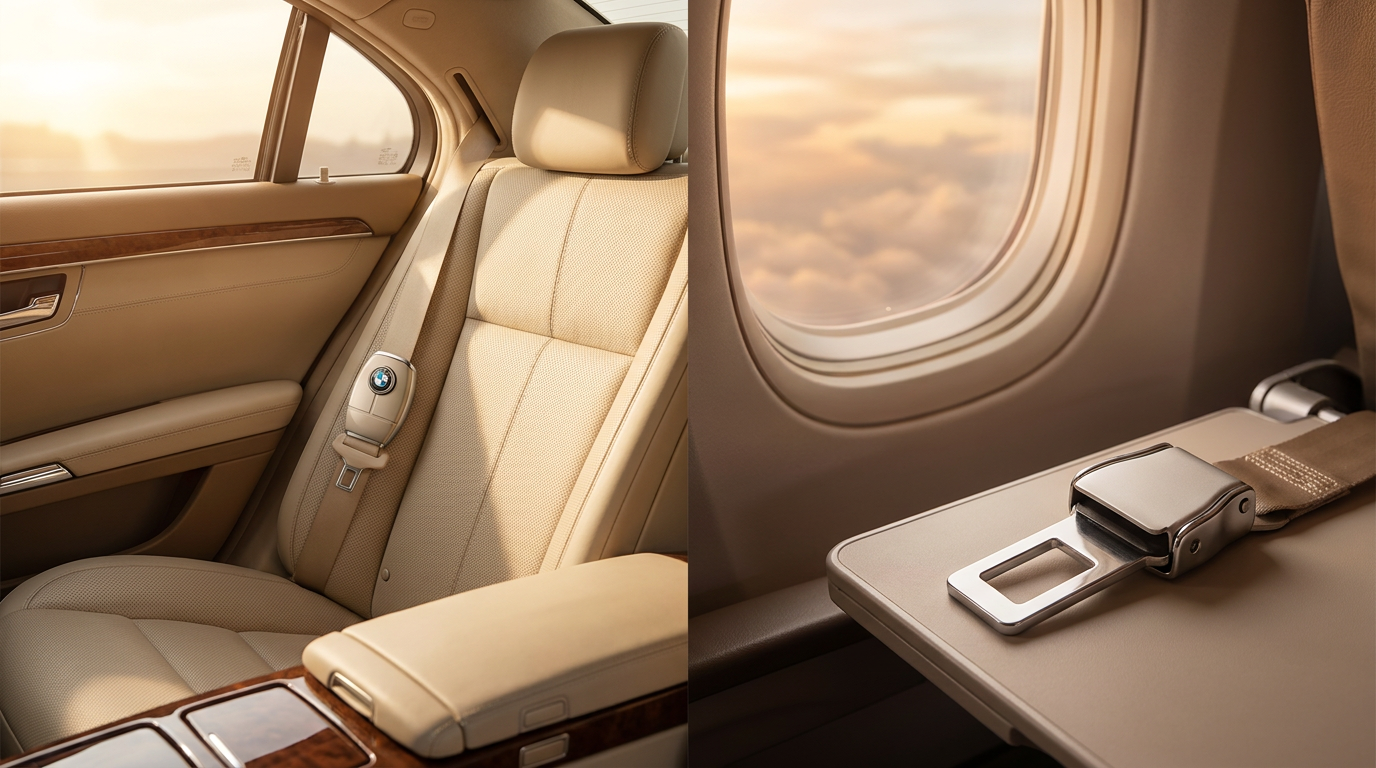
Can I use an Adjustable Vehicle Seat Belt Extension on a plane?
 Jordan HaleStaff Writer
July 7, 2026 — While both devices are designed to provide extra length for occupant comfort, a car-specific Adjustable Vehicle Seat Belt Extension is not interchangeable with an airplane extender due to fundamental differences in latch geometry and federal safety certification standards.
I remember the distinct, heavy metallic click of a buckle during a cross-country flight last autumn. The first thing I noticed was how different that sound was compared to the snap of my car's seat belt; it was a deeper, more industrial thud. Many travelers ask if they can simply bring their automotive hardware into the cabin to avoid the awkwardness of asking a flight attendant for assistance, but the mechanical reality of these two environments is worlds apart.
Why are car and airplane seat belt extenders not interchangeable?
It turns out that car extenders use a tongue-and-socket mechanism designed for high-velocity impact, while airplane extenders utilize a lift-lever buckle system designed for cabin pressure and rapid evacuation scenarios. According to Seat Belt Extender Pros, airplane extenders are specifically engineered for the unique 2-inch wide webbing and latch styles found in commercial aircraft, which differ from the standardized 21.5mm or 24.5mm tongues found in road vehicles. Attempting to force an Adjustable Vehicle Seat Belt Extension into an airline seat is more than a mechanical mismatch; it is a safety violation. SeatbeltExtenders.com notes that car extenders are built to meet automotive safety standards, while aviation versions must comply with specific FAA Technical Standard Orders (TSO). Because of these distinct engineering paths, a device that keeps you safe at 65 mph on the highway is not the same tool required at 35,000 feet.
Can I bring my own FAA-approved extension on a flight?

Photo by Axel Sandoval on Pexels
While you can purchase your own aviation-specific extension, many airlines strictly prohibit passengers from using personal safety equipment that has not been provided by the flight crew. I keep coming back to a discussion among frequent flyers on Facebook where travelers noted that, as a general rule, passengers are often denied the use of their own belts in favor of the airline's inventory. Flight attendants are trained to identify their own equipment during safety checks, and using an unverified third-party device can lead to a request to remove it. If you are traveling and require an adjustable seat belt extension for plus size comfort, the most reliable path is to discreetly ask the crew upon boarding. They are equipped to provide extensions that are specifically tested for that aircraft's seat configuration, ensuring the metal-to-metal connection is flawless.
Quick answers
Q: Is a car seat belt extender safe for use on a commercial aircraft? A: No, car extenders are designed for automotive crash forces and different buckle geometries; using one on a plane is unsafe and mechanically incompatible. SeatbeltExtenders.com confirms that these two types of equipment are not interchangeable.
Q: How much does a dedicated airplane seat belt extender typically cost? A: A high-quality airplane extender from a reputable source like Seat Belt Extender Pros typically has an MSRP of $99.99, though they are often available for around $69.99. These are specifically designed for airline TSO standards.
Q: How do I know if my vehicle extender is safe for my car? A: You should look for an e4 safety certified seat belt extender to ensure it has passed rigorous European safety testing. It is also vital to determine if a universal seat belt extender actually fits your specific vehicle's make and model before use.
Learn more about Adjustable Vehicle Seat Belt Extension at https://carseatbeltextension.com.
Sources

- Airplane Extenders - Seat Belt Extender Pros
- The Truth About FAA Approved Seat Belt Extenders
- Has anyone tried taking their own seatbelt extender to save ...